
Rock & Co · Kitchen design and installation
Quartz splashbacks: design, costs and installation
Bring your worktop design up the wall. Explore matching quartz splashbacks, full-height panels and upstands, with practical advice on layout, care and hob suitability.
A made-to-measure splashback can create a coordinated finish around your kitchen. Rock & Co can help you compare colours, plan the panels and discuss templating, fabrication and fitting for your project.
For an initial quotation, share your kitchen plan or approximate wall measurements, preferred colour, project postcode and hob model.
What is a quartz splashback?
A quartz splashback is a panel of engineered stone fitted to the wall above a worktop. It protects the covered wall from everyday splashes and provides a finished surface around preparation and sink areas. Using the same colour as your worktop can create a continuous design, while a contrasting panel can make the splashback a feature.
Quartz is an engineered surface rather than a slab of natural granite. Its composition, finish and application requirements vary between products. Choose the exact material with your fabricator and confirm that it is suitable for each area where it will be installed.
Full-height splashbacks, upstands and feature panels
Full-height quartz splashbacks
A full-height panel usually extends from the worktop to the underside of wall cabinets, shelves or another agreed finishing point. It creates a larger area of pattern and reduces the number of grout joints compared with a tiled finish. Panel sizes, joins and access must be planned before manufacture.
Quartz upstands
An upstand is a shorter strip of material along the back of the worktop. It finishes the worktop-to-wall junction and can be combined with paint, tiles or a separate splashback above it. The height should suit the kitchen design; an upstand does not automatically provide the wall protection needed behind a hob.
Matching or contrasting designs
Plain quartz gives a quieter finish, while a veined design adds movement across the wall. For larger panels, discuss vein direction, the proposed slab layout and how the pattern will meet the worktop. Bookmatching or an uninterrupted pattern depends on the selected slab and fabrication plan; it should not be assumed from a small sample.
Explore the current quartz colour collection and compare samples with your cabinet doors, lighting and flooring.
Can quartz be used as a splashback behind a hob?
Suitability must be checked for the specific quartz product, hob and kitchen layout. Quartz contains binders that can be affected by excessive heat. Direct flame, very hot cookware and concentrated heat can damage the surface, so a general statement that all quartz is suitable behind every hob would be misleading.
Provide the hob model and installation instructions before ordering. Your installer should check both the appliance manufacturer’s clearances and the surface manufacturer’s requirements, including any restrictions for gas hobs. Do not apply one generic clearance to every product.
If the selected quartz is unsuitable for the proposed hob area, discuss an approved alternative such as a suitable porcelain panel or another heat-rated splashback material. The specification and installation still need to be confirmed for that product.
Agree the splashback material and hob requirements before templating. Moving sockets, electrical connections or a gas appliance requires the appropriate trade professional.
What affects the cost of a quartz splashback?
The price depends on the material and the work needed for your particular kitchen. A useful quotation should cover the panel layout rather than relying solely on a square-metre headline price.
- Quartz colour and finish: prices vary between products and ranges.
- Panel dimensions and slab usage: height, width and the number of pieces affect material requirements.
- Cut-outs: socket positions, switches and other openings add fabrication detail.
- Vein layout and joins: matching patterns can influence how the slab is cut.
- Site preparation and access: wall condition, delivery route and fitting requirements matter.
- Project scope: clarify templating, fitting, delivery, removal of old finishes and VAT.
An off-cut from a worktop slab may sometimes be suitable for a splashback, but its size, pattern and availability must be checked. It is not a guaranteed saving. Ask for the splashback to be included in the worktop quotation so the full layout can be planned together.
Read what affects quartz worktop costs, or send your plans for a project quotation.
Quartz, tiles or another splashback material?
| Option | Design consideration | What to check |
|---|---|---|
| Quartz panel | Can coordinate with quartz worktops, with fewer joints than small tiles. | Product suitability, hob clearances, panel sizes and cut-outs. |
| Tiles | A wide choice of shapes, colours and patterns; can contrast with the worktop. | Tile specification, grout care, wall preparation and installation detail. |
| Porcelain panel | Large-format designs can create a continuous visual effect. | The exact product’s application, handling and installation requirements. |
| Glass or stainless steel | A contrasting finish can define the cooking area. | Suitable product specification, heat requirements and cleaning guidance. |
How a made-to-measure quartz splashback is installed
- Plan the layout. Confirm the surface, height, joins, sockets, hob and finishing points.
- Prepare the kitchen. Agree which worktops, cabinets and wall finishes must be in place before measurement.
- Template the panels. Record the wall dimensions and cut-out positions for fabrication.
- Fabricate and fit. Panels are cut and finished, then installed using methods suitable for the product and wall substrate.
- Check the finish and care guidance. Review joins, seals, openings and the manufacturer’s cleaning instructions.
Wall condition, panel weight and access are part of the installation plan. Avoid ordering a panel from approximate measurements alone. See the Rock & Co templating and installation process.
Cleaning and caring for a quartz splashback
Follow the care guide for your chosen brand and finish. Mild soapy water and a soft cloth are commonly used for routine cleaning; remove splashes promptly and check approved methods for stubborn marks. Avoid abrasive tools and unfamiliar strong chemicals unless the manufacturer specifically permits them.
A quartz panel is not damage-proof or automatically antibacterial. Keep the surface clean, protect it from excessive heat and contact your supplier before attempting a repair or using an aggressive cleaner.
For further product guidance, see Caesarstone’s worktop and splashback planning advice and the care instructions supplied with your selected material.
Quartz splashbacks in Rock & Co kitchens
These photographs from completed installations show quartz splashbacks and upstand details. Use them as design inspiration, then confirm the product and layout for your own kitchen.
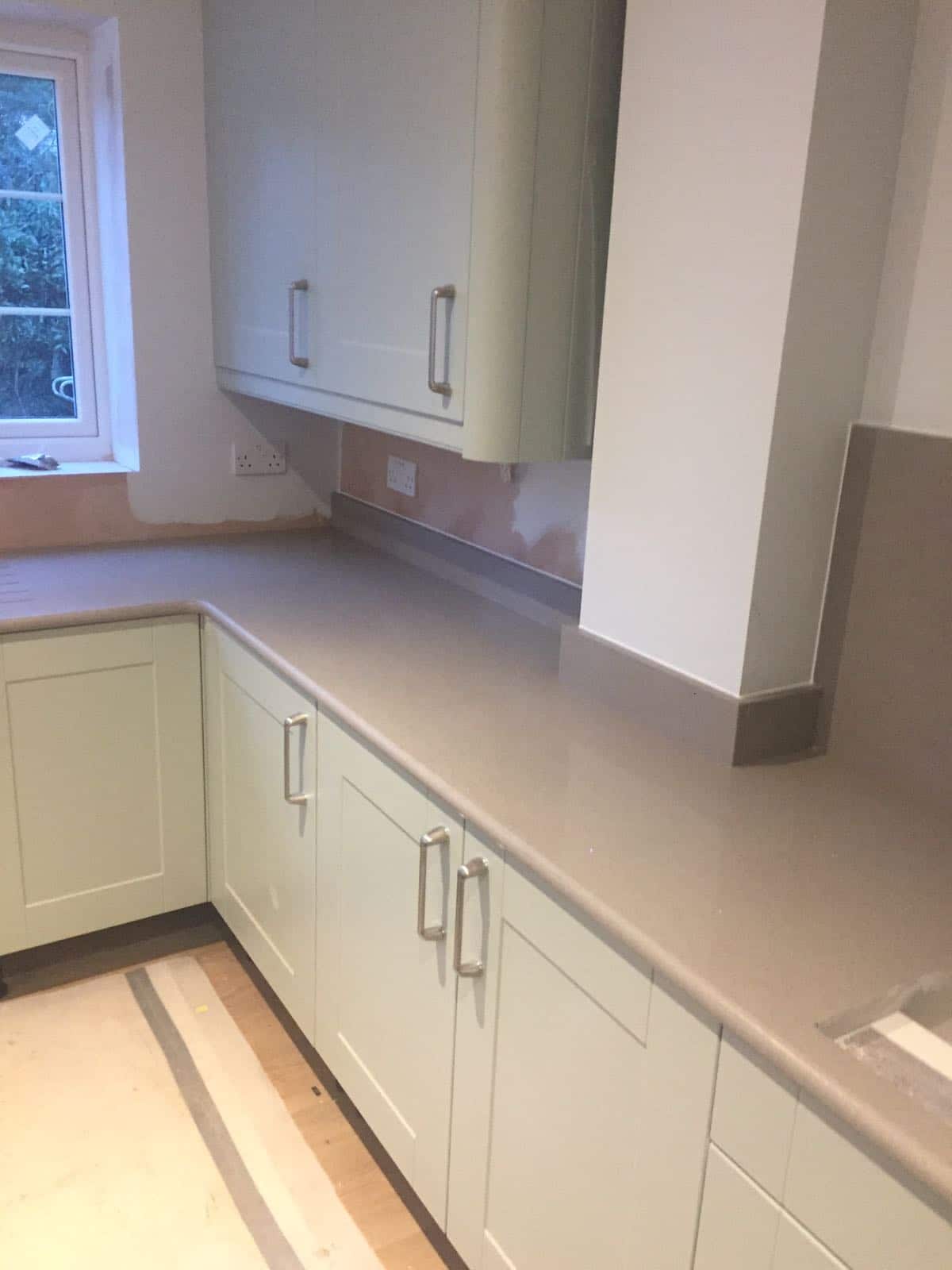
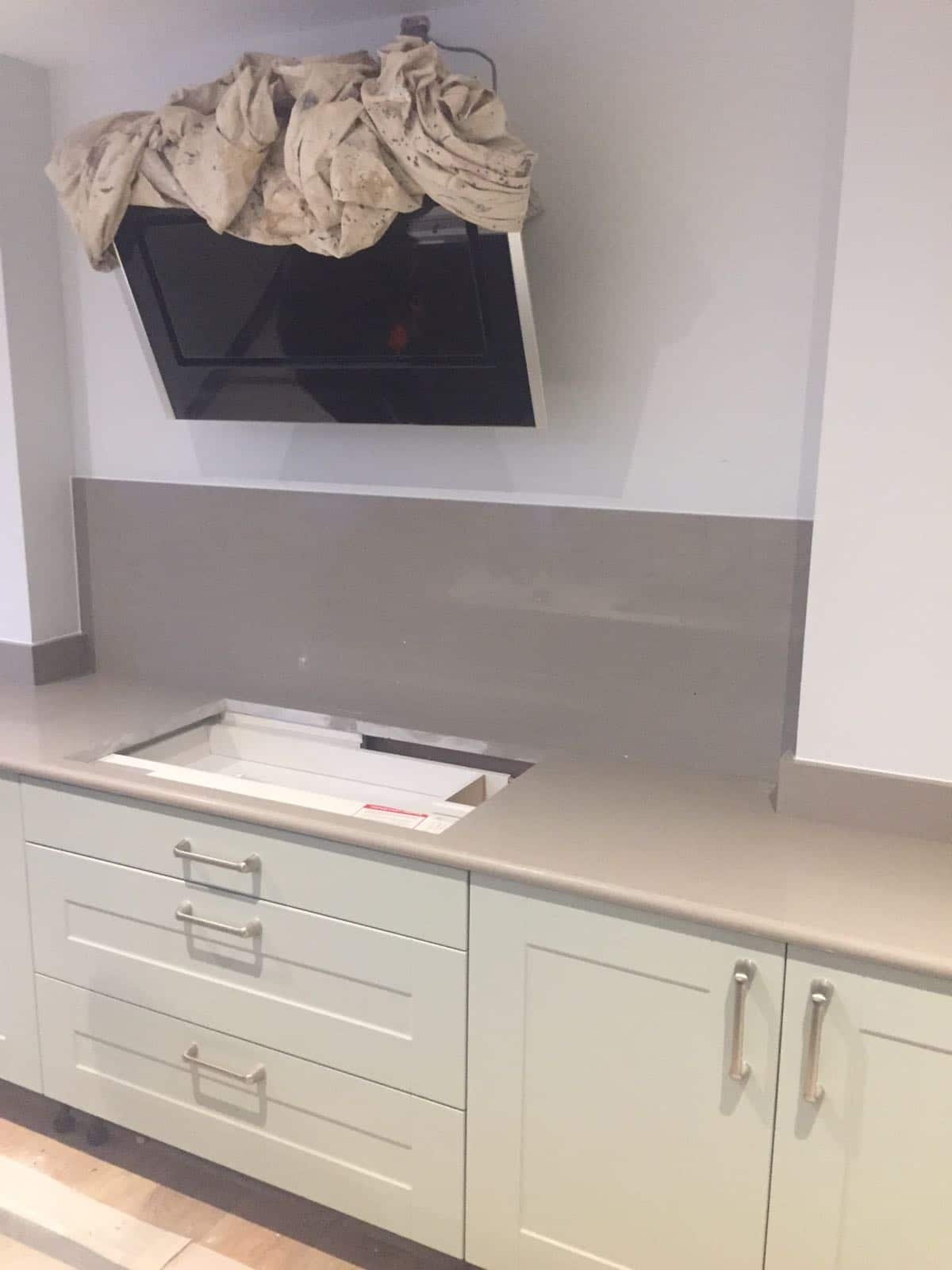
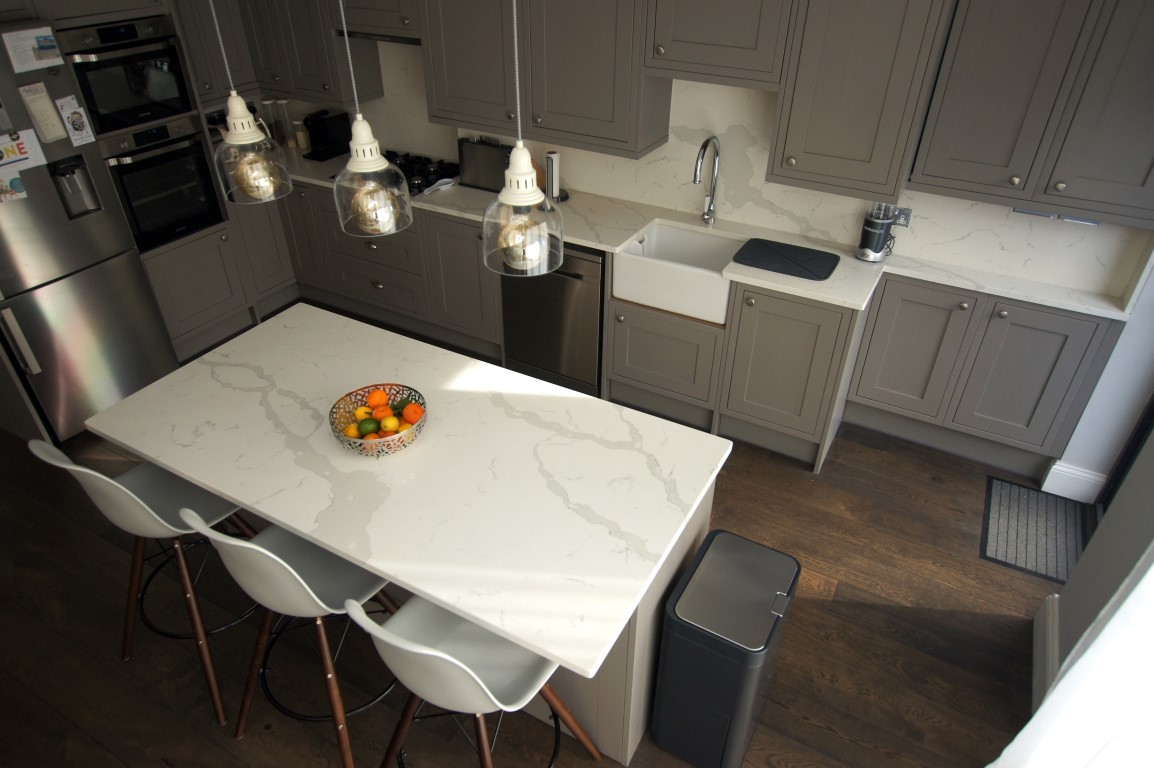
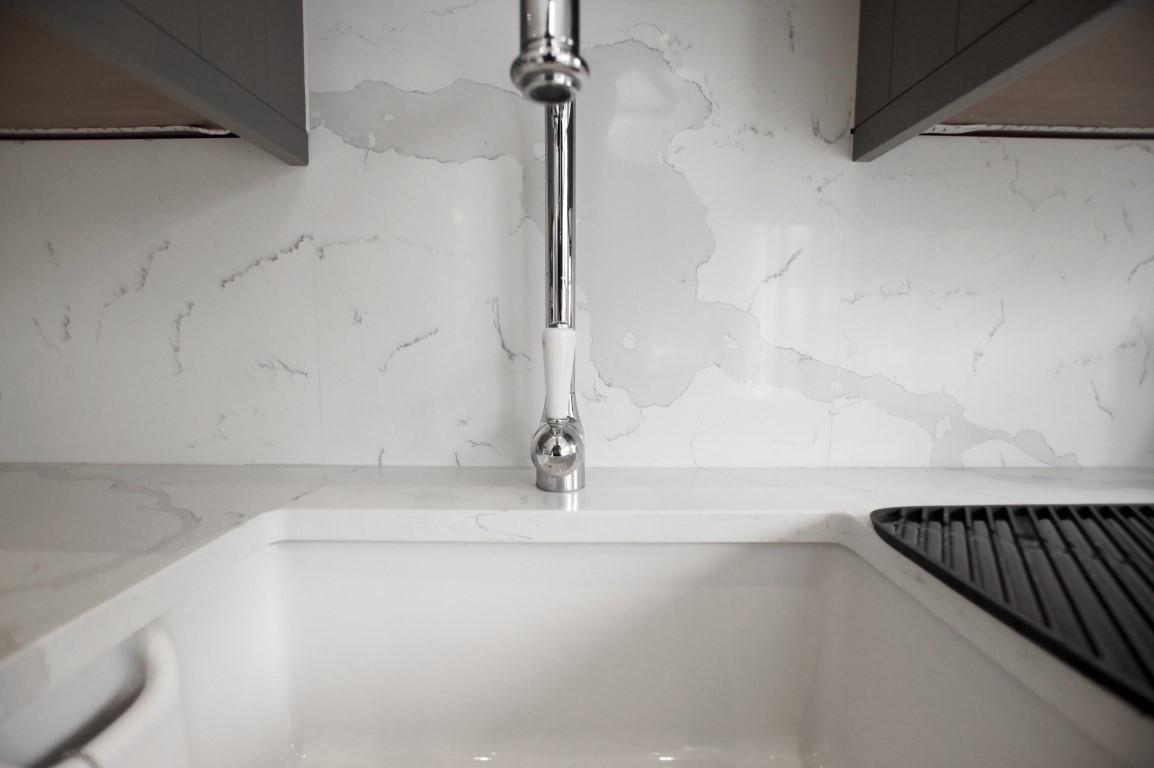
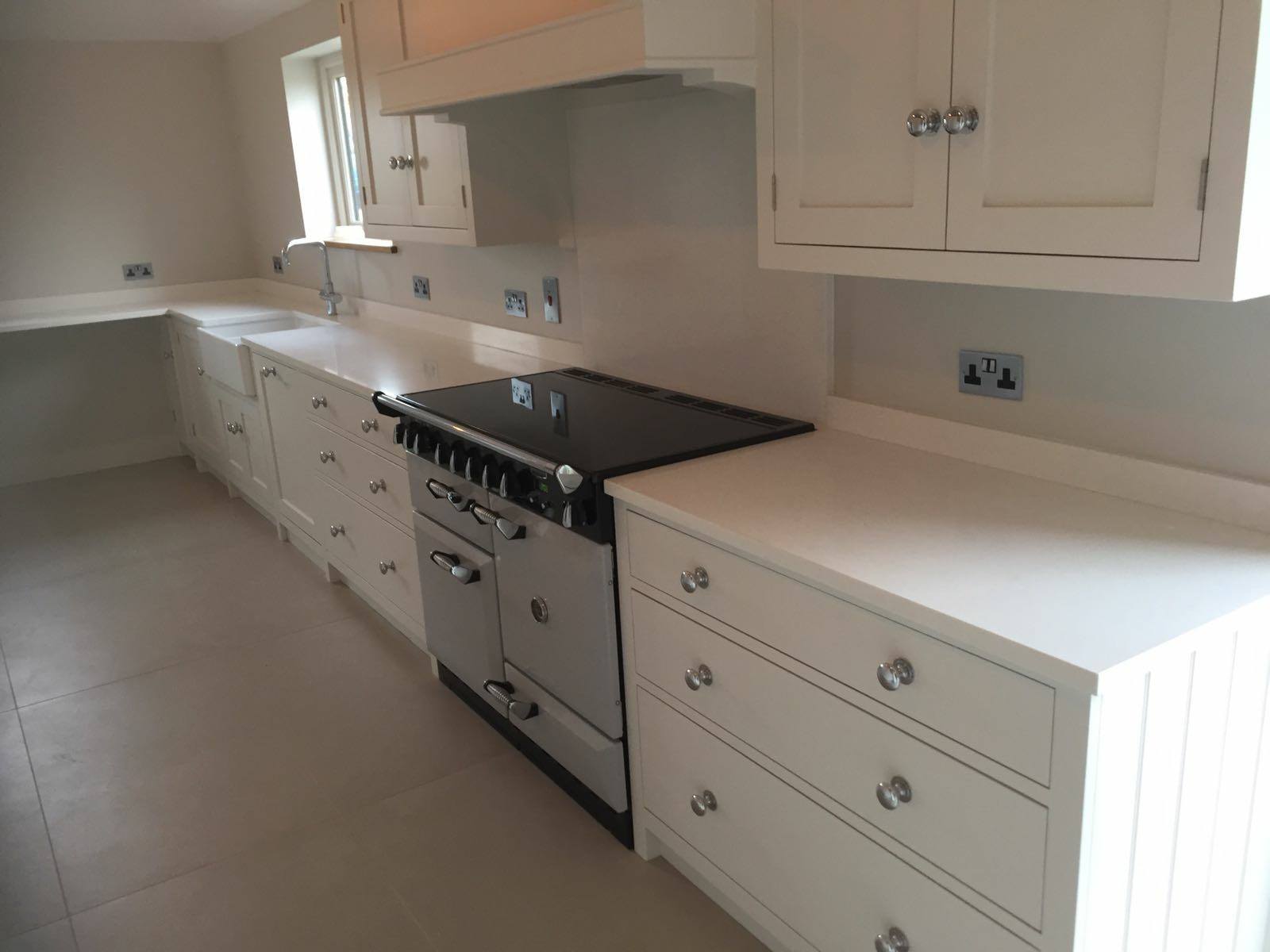
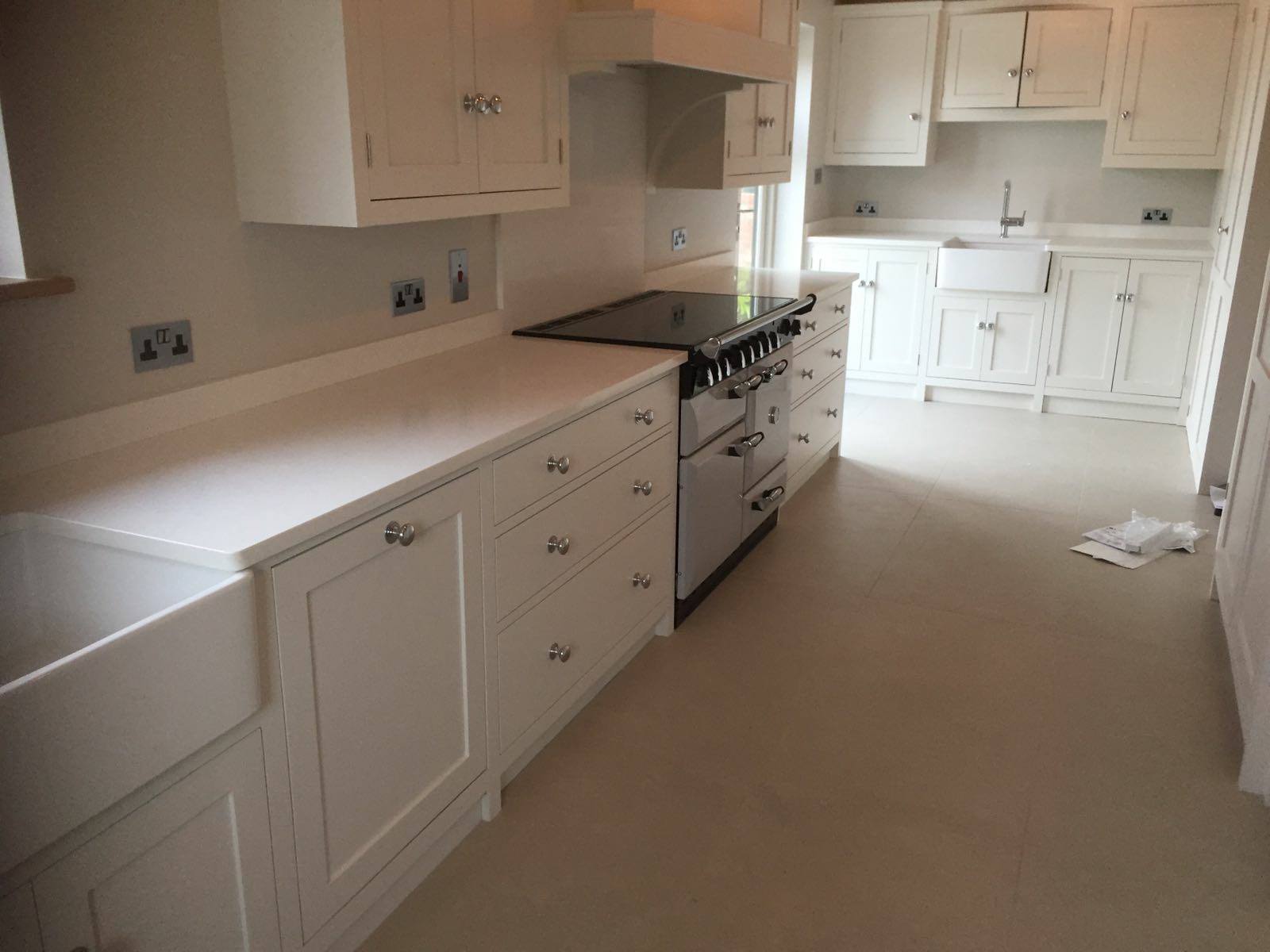
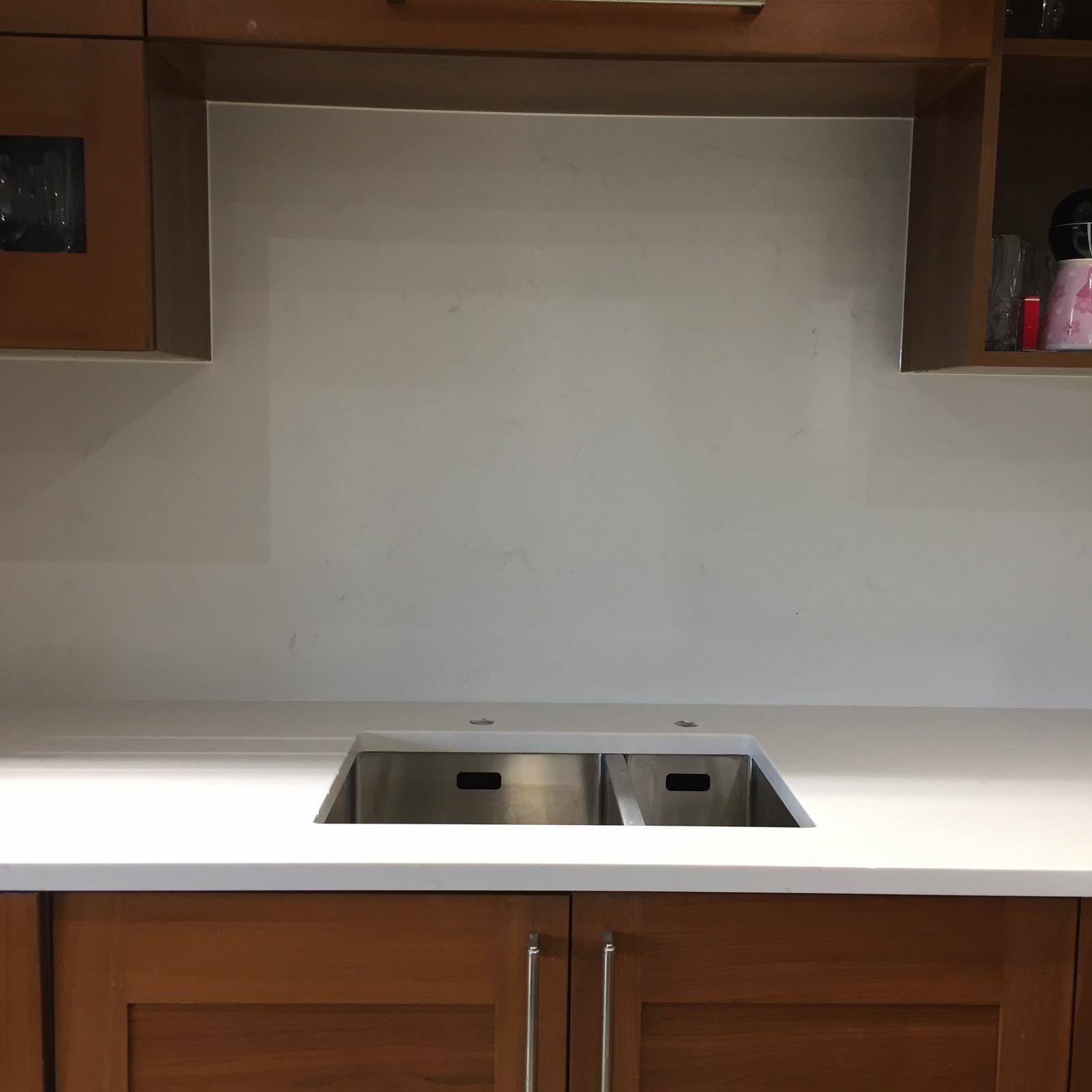
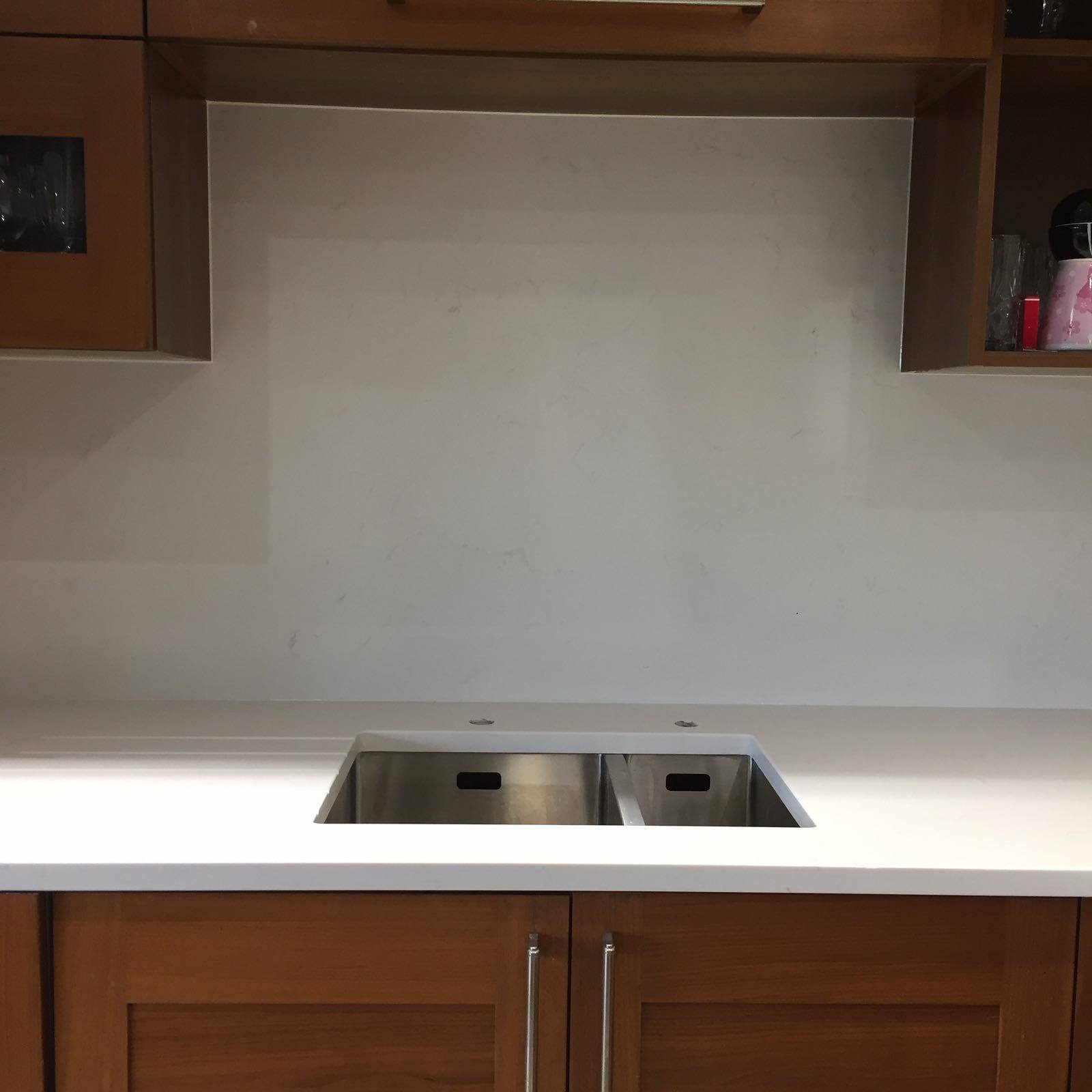
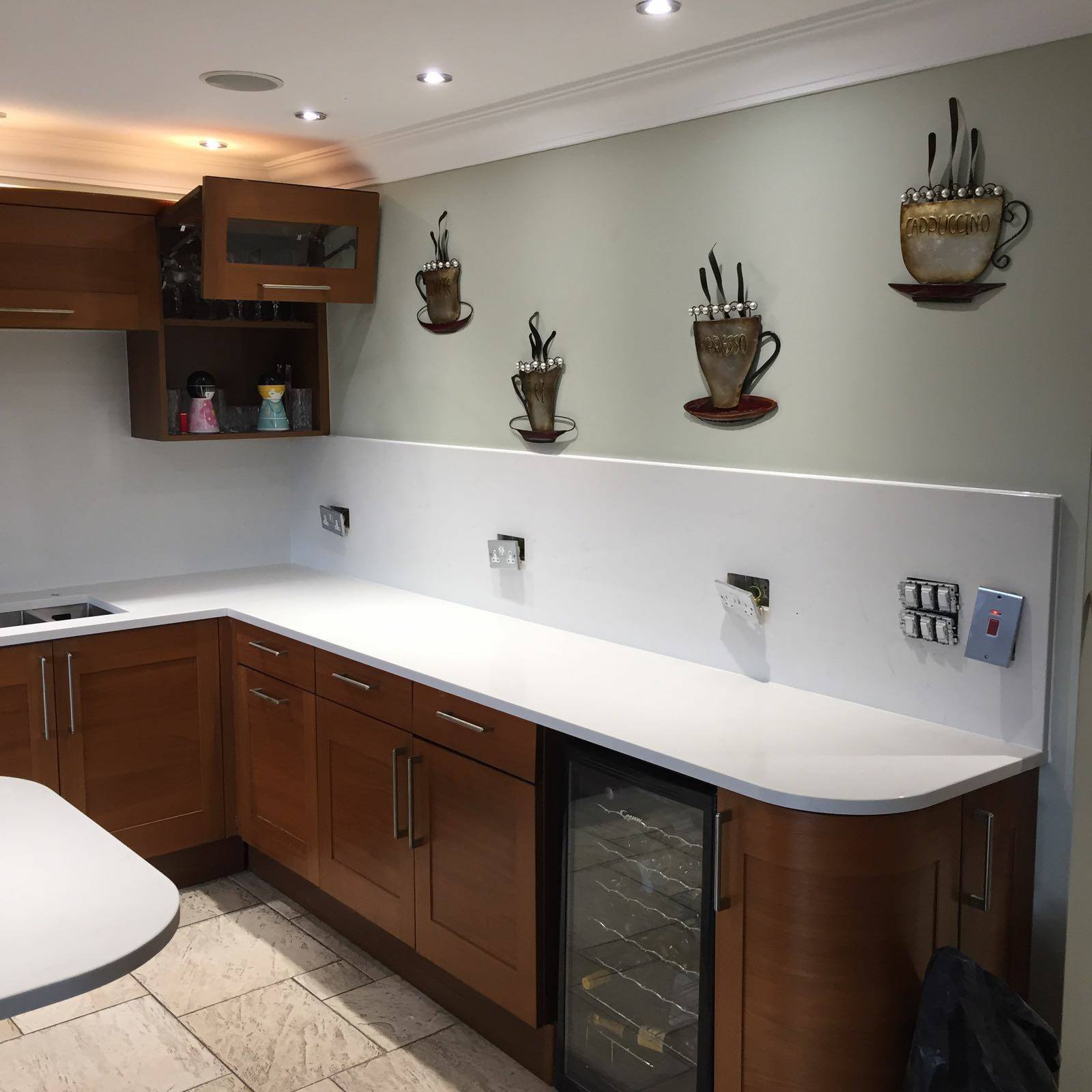
A quartz worktop with a tiled splashback
A matching stone panel is one option. This installation shows how tiles can also complement a quartz worktop.
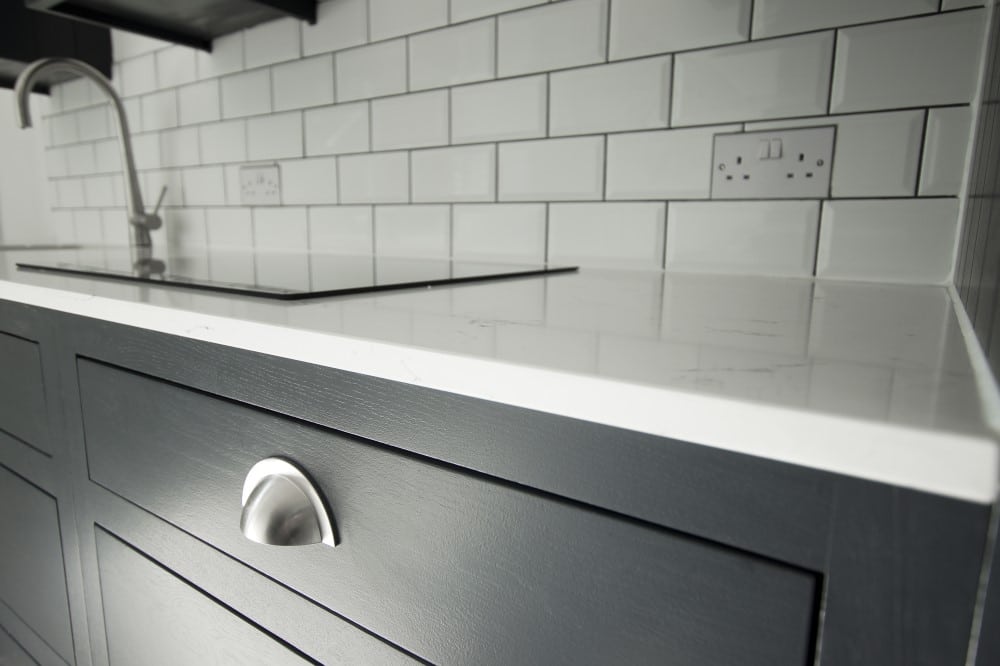
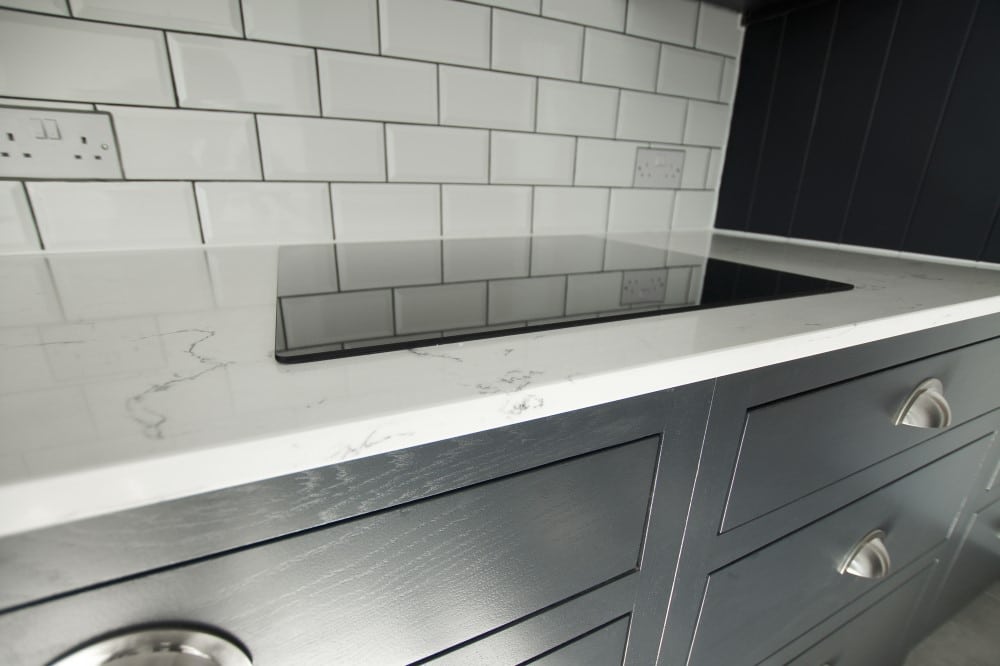
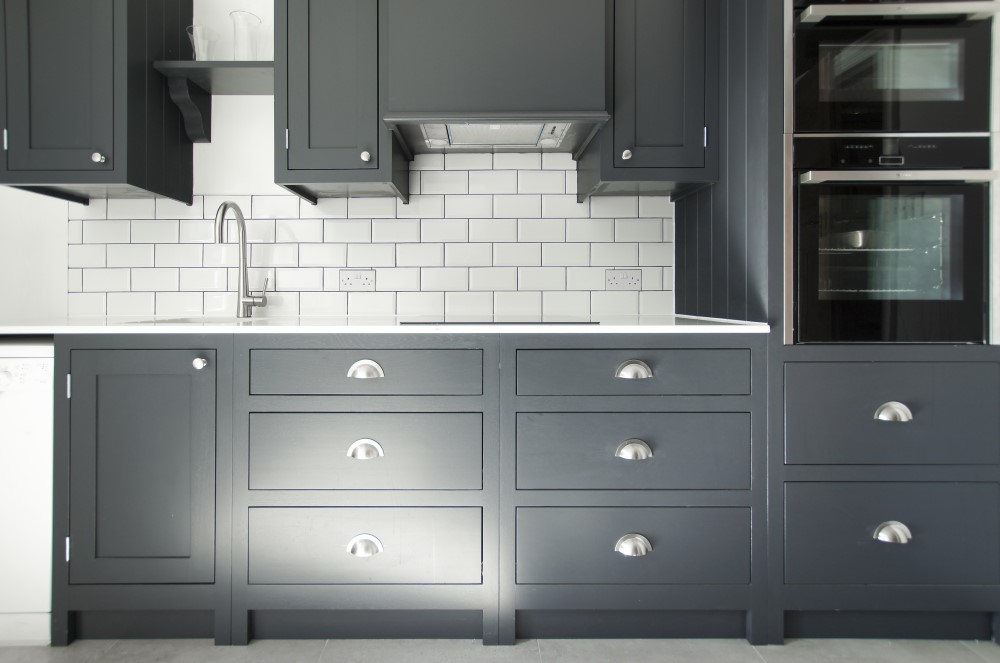
Made to measure by Rock & Co
Plan your quartz worktop and splashback together
Share your plans, approximate splashback dimensions and preferred colour. Tell us about your hob, sockets and desired panel height so our team can discuss suitability and prepare a quotation.
Quartz splashback FAQs
Is a quartz splashback a good choice for a kitchen?
It can be a good choice when you want a panel that coordinates with your quartz worktop. Confirm the selected product’s suitability, particularly around cooking appliances, and plan the panel layout before ordering.
Can I have a quartz splashback behind a gas hob?
Do not assume every quartz product is suitable. Your fabricator and installer need to check the surface specification and the gas hob manufacturer’s installation requirements for the proposed layout.
How much does a quartz splashback cost?
The quotation depends on the quartz, panel dimensions, slab usage, cut-outs, joins, wall preparation and fitting. Send your kitchen plan and preferred material for a price based on your actual project.
What is the difference between an upstand and a splashback?
An upstand is a short strip at the back of the worktop. A splashback covers a larger section of wall, often up to cabinets or another agreed finishing point. The coverage should suit the area and the required protection.
Can the splashback match my existing quartz worktop?
Matching may be possible if the same product is available. Colour and pattern can vary between slabs or batches, so provide the original product details and compare samples before ordering.
Will a full-height quartz splashback have joins?
It may need joins depending on slab dimensions, access, openings and the proposed layout. Agree the panel sizes and join positions before fabrication.
Can you use worktop off-cuts for a splashback?
Sometimes, if the off-cut is large enough and suitable for the design. Availability, vein direction and cut-outs must be checked; an off-cut should not be assumed to provide a free splashback.
Related kitchen planning guides
Quartz worktop supply and installation · Quartz colours · Edge profiles · Porcelain worktops